Palma adds a new Future Classroom lab to the national network of Aulas del Futuro for teacher training
The Spanish Aula del Futuro (Future Classroom) network, promoted by the National Institute of Educational Technologies and Teacher Training (INTEF), reached its full deployment on July 1st with the inauguration of the final lab in Palma, Illes Balears.
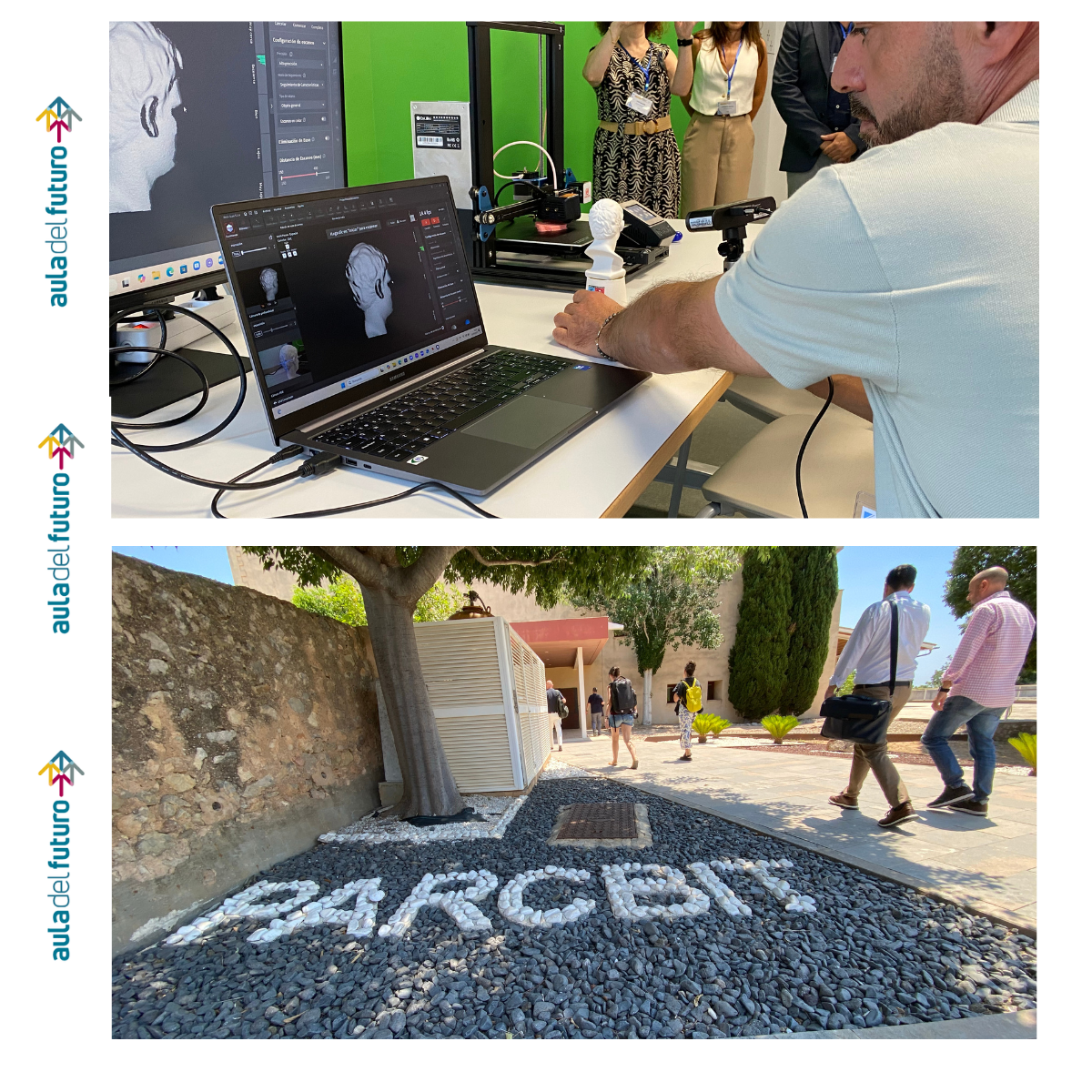
This new space, located in Edificio 17 of ParcBIT in Palma, represents the 16th and final classroom to be established under the national project initiated in 2021.
The main objective is to serve as a hub for teacher training, boosting their digital competence and fostering the adoption of active methodologies.
The Palma lab, like all other spaces in the network, is designed with flexible furniture and advanced technological solutions to facilitate training in areas such as robotics, programming, augmented reality, and collaborative learning.
The completion of this rollout ensures that this model for professional development is accessible to all educational communities among those regions that have adhered to the ministerial agreement.
Bridging History and the Future: MAN Virtual Classroom at INTEF’s Future Classroom Lab
The INTEF Aula del Futuro in Madrid was the venue for an Open Day on October 6th, highlighting the convergence of historical heritage and educational innovation. The central event was the presentation of the MAN Virtual Classroom (Museo Arqueológico Nacional Aula Virtual), a pioneering digital resource.
This tool is crucial as it offers resources and didactic materials prepared directly by the museum, featuring interactive tours adapted for different educational levels. By providing this access to high-quality content to all students, the MAN Virtual Classroom becomes a key instrument for reducing the digital gap and inequality in accessing cultural and historical heritage.
Hosted at the Aula del Futuro at INTEF premises, the session emphasized the critical role of technology in current days. Attending educators learned how to implement the Aula del Futuro model and the role Samsung has played into the project itself by fostering the implementation of educational technologies focused on developing key 21st-century skills.
More Info: MAN aula Virtual resources

Regional Aula del Futuro Training: Key Focus on Digital Skills in Andalusia and Castilla y León
The Autonomous Communities of Andalusia and Castilla y León are rolling out a comprehensive set of upcoming teacher training activities, leveraging the national Future Classroom (Aula del Futuro) model established in coordination with INTEF. These courses, organized by the different regional training centers, aim to significantly boost educators' skills using the collaborative, technology-rich environments of the Future Classroom labs.
Focus Areas by Region
Andalusia has a strong emphasis on Digital Content Creation, AI Integration, and Computational Thinking. Courses such as "Canva for Teachers" and "Podcast/Videopodcast in the Classroom" are designed to develop teachers' Digital Competence (CDD) by teaching them to integrate AI features and multimedia tools to create engaging and personalized didactic resources.
Additionally, there are specialized courses on Robotics and Computational Thinking for Infant Education introducing concepts, programmable robots, and tools like Makey-Makey to early learners. Training for Vocational Training (FP) educators on Professional Video Creation is also offered, covering advanced editing and narrative techniques.
Castilla y León and Andalusia both prioritize Active Methodologies to drive methodological change. While Andalusia offers an in-depth course on Gamification, the Castilla y León training focuses on Digital Design and Critical Thinking. This practical course empowers teachers as content creators and project facilitators by training them in the use of specialized software for operating 3D printers, cutting plotters, and advanced multimedia editing tools like KineMaster and Audacity.
These regional initiatives emphasize a commitment to localized, practical training within the Aula del Futuro spaces, directly equipping teachers with the competencies needed for the 21st-century classroom.

Regional Aula del Futuro Training: Key Focus on Digital Skills in Andalusia and Castilla y León
The Autonomous Communities of Andalusia and Castilla y León are rolling out a comprehensive set of upcoming teacher training activities, leveraging the national Future Classroom (Aula del Futuro) model established in coordination with INTEF. These courses, organized by the different regional training centers, aim to significantly boost educators' skills using the collaborative, technology-rich environments of the Future Classroom labs.
Focus Areas by Region
Andalusia has a strong emphasis on Digital Content Creation, AI Integration, and Computational Thinking. Courses such as "Canva for Teachers" and "Podcast/Videopodcast in the Classroom" are designed to develop teachers' Digital Competence (CDD) by teaching them to integrate AI features and multimedia tools to create engaging and personalized didactic resources.
Additionally, there are specialized courses on Robotics and Computational Thinking for Infant Education introducing concepts, programmable robots, and tools like Makey-Makey to early learners. Training for Vocational Training (FP) educators on Professional Video Creation is also offered, covering advanced editing and narrative techniques.
Castilla y León and Andalusia both prioritize Active Methodologies to drive methodological change. While Andalusia offers an in-depth course on Gamification, the Castilla y León training focuses on Digital Design and Critical Thinking. This practical course empowers teachers as content creators and project facilitators by training them in the use of specialized software for operating 3D printers, cutting plotters, and advanced multimedia editing tools like KineMaster and Audacity.
These regional initiatives emphasize a commitment to localized, practical training within the Aula del Futuro spaces, directly equipping teachers with the competencies needed for the 21st-century classroom.
Author: Sara Sánchez Vílchez
