EU Code Week Malta Educators’ Programme: Computational Thinking within the FCL Framework
The sixth edition of the EU Code Week Malta Educators’ Programme, organised by the Directorate for Digital Literacy and Transversal Skills (DDLTS) in partnership with the Malta Digital Innovation Authority (MDIA), the Code4Europe Consortium, the Faculty of Education at the University of Malta, and the Secretariat for Catholic Education (SFCE), offers primary educators valuable opportunities to engage with coding, computational thinking, Bebras challenges and educational robotics.
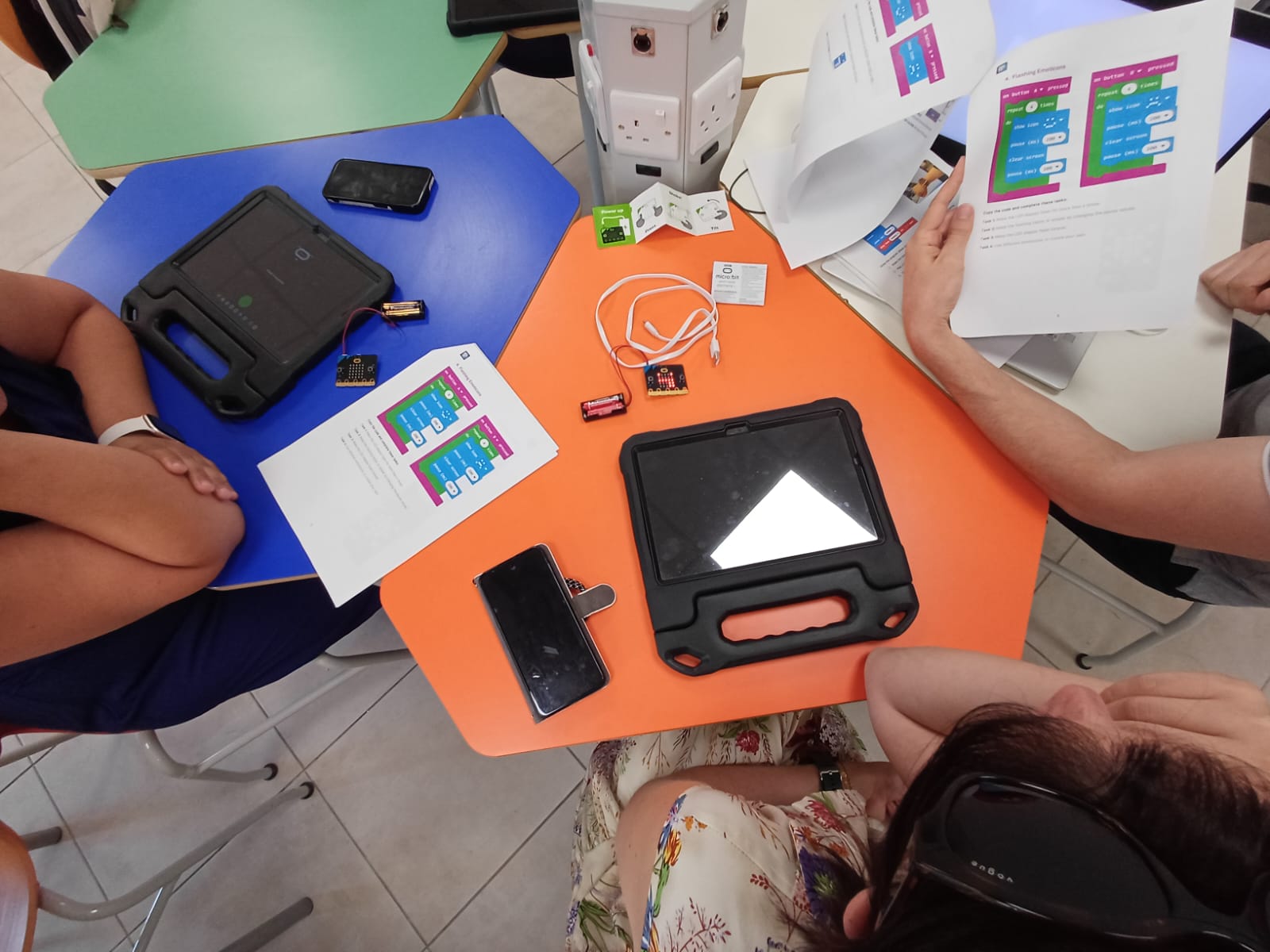
Adopting a practical and collaborative approach, the programme enables participants to explore a range of educational technologies and reflect on how these can be effectively integrated across different curriculum areas. Educators are also introduced to the Code AI CS Fundamentals Curriculum, exploring how its resources can support meaningful cross-curricular learning experiences.
The programme is closely aligned with the pedagogical framework of the Future Classroom Lab (FCL) and its six learning zones. Within the Investigate zone, educators examine coding platforms and robotics tools while considering their application in diverse learning contexts. The Create zone is embedded through hands-on activities that require participants to design, programme, test, and refine digital solutions. Opportunities for collaboration and knowledge sharing are fostered through the Interact and Exchange zones, where educators discuss classroom implementation, share experiences, and provide peer feedback.
The Develop zone encourages participants to critically reflect on their current teaching practices and explore innovative ways of embedding computational thinking and coding within learning activities. Meanwhile, the Present zone allows educators to showcase their projects, explain their solutions, and share insights gained throughout the programme.
Beyond enhancing technical skills, the programme promotes essential competences such as creativity, collaboration, communication, problem-solving, and reflective practice. By supporting educators in designing learner-centred experiences that align with the Future Classroom approach, the programme also deepens participants’ understanding of the EU Code Week framework and encourages their active participation in a broader community of practice where knowledge, resources, and experiences related to coding and computational thinking continue to be exchanged and developed.