Learning Across Spaces: Exploring the Role of Space in Professional Learning
On 4 June 2026, educators and trainers gathered at IFEN in Walferdange, Luxembourg, for the pedagogical vernissage Learning Across Spaces. The event explored a central question for professional learning: How do spaces shape the way we learn?
The vernissage was designed around IFEN’s quality criteria for effective professional development, highlighting how thoughtful learning design and intentional use of space can contribute to meaningful and sustainable learning experiences. Participants were invited to consider learning environments not simply as settings in which training takes place, but as active elements that influence engagement, collaboration, reflection, and motivation.
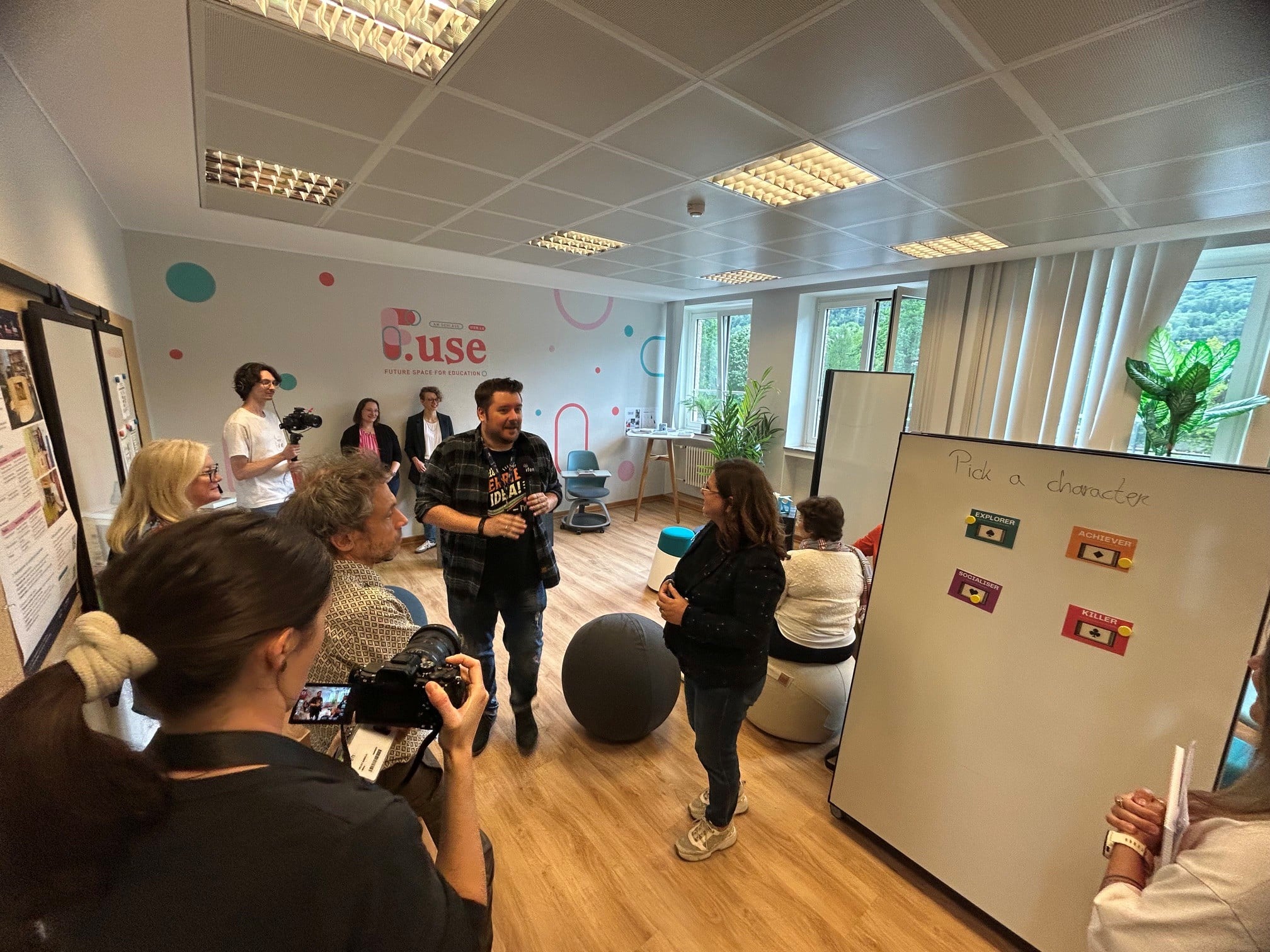
Throughout the afternoon, participants experienced a variety of learning spaces that illustrated different approaches to supporting learning. These spaces were presented by Michael Fink (Germany), Bart Verswijvel (European Schoolnet, Brussels), and IFEN trainers Julia Strohmer, Charlotte van den Hove, Valérie Rossi, and Chris Krier (FCL ambassador). Together, they showcased how physical, digital, and mental spaces can be intentionally designed to align with the principles of high-quality professional development.
A key objective of the event was to make IFEN’s quality criteria visible and tangible through concrete examples. Participants explored how learning spaces can foster active participation, encourage collaboration, support reflection, and create conditions for learner-centred professional development. Through direct exchanges with the facilitators, they gained insights into the pedagogical and methodological decisions underlying each learning environment.
The event also provided valuable opportunities for collegial dialogue. Participants reflected on their experiences, shared perspectives, and discussed how the ideas presented could be transferred to their own training contexts. Beyond questions of spatial design, the discussions highlighted a broader professional development challenge: the evolving role of educators themselves. Designing powerful learning environments requires a shift in mindset: from being primarily providers of knowledge to becoming facilitators of learning. In this perspective, trainers and teachers are not at the centre of the learning process but act as guides who create the conditions in which learners can actively engage, collaborate, reflect, and construct knowledge. This development of professional posture emerged as a key theme throughout the event.
The afternoon concluded with an inspiring keynote by Katharina Garth on the concept of “Space as the third educator.” Building on the experiences of the day, she explored the relationship between learning environments, educational quality, and professional identity. Her keynote highlighted that effective professional development is shaped not only by content and facilitation but also by the spaces in which learning occurs and by the attitudes of those who design and facilitate these experiences.
The pedagogical vernissage demonstrated how IFEN’s quality criteria can be brought to life through intentional learning design. By connecting pedagogical principles with physical, digital, and mental learning spaces and by encouraging a shift from teacher-centred instruction towards a facilitative role focused on learning: the event offered participants new perspectives on creating engaging and impactful professional development experiences. The discussions and examples presented throughout the afternoon reinforced a shared understanding: high-quality learning emerges when space, pedagogy, and professional mindset are deliberately aligned.
Author: Sarah Monfils
