Portugal: How the Future Classroom Lab “Create Zone” is inspiring Multimedia Studios in Schools
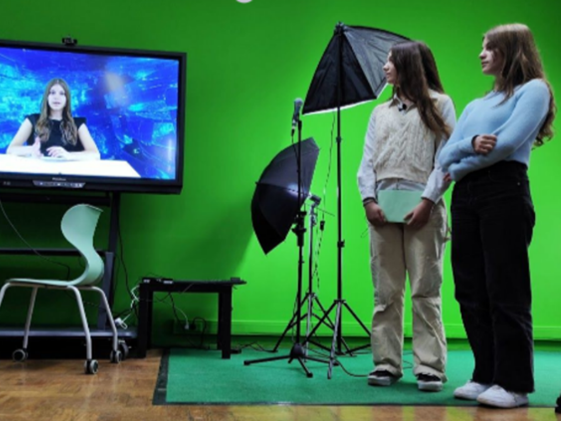
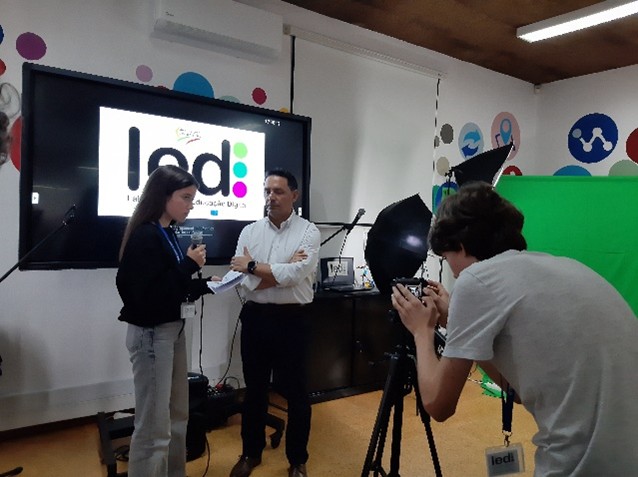
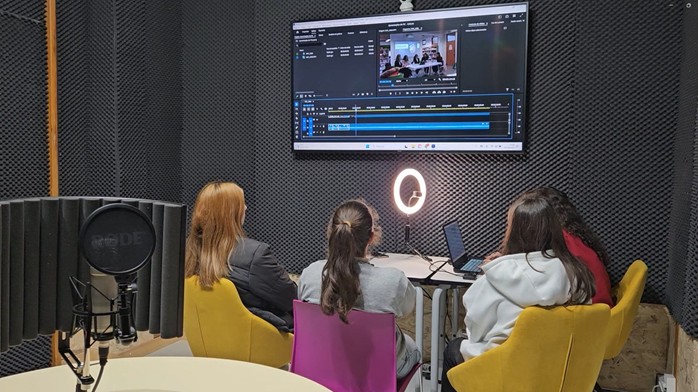
In Portuguese schools, the multimedia studios of the Digital Education Labs (LED) have become lively and versatile learning spaces, strongly inspired by the Future Classroom Lab’s Create Zone. Beyond short news reports or interviews, these studios are now used for a wide range of activities that encourage students to discuss, create and communicate with clarity and purpose.
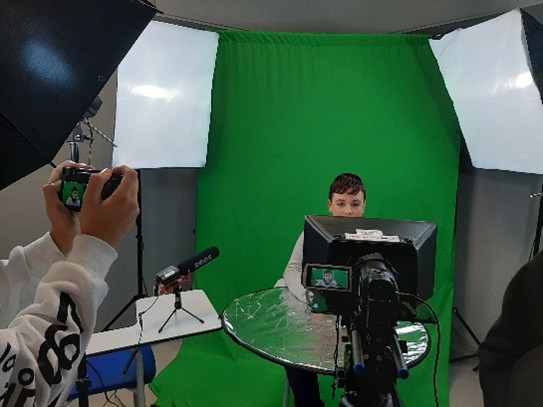
In many cases, students take the lead: they write scripts, prepare their contributions, operate cameras and lights, manage the teleprompter, and edit their own recordings — all supported by their teachers. This process helps them plan, collaborate and make decisions in a practical and meaningful way.
Across the country, several schools have already experimented with this approach in meaningful ways. At Cristelo School Group, for example, the LED multimedia studio has been used for news reports, debates and short documentaries produced by students, who also learned to manage the technical setup of cameras, teleprompters and audio recording. At Freixo School Group, students scripted, recorded and edited a full TV news programme, transforming curriculum content into engaging visual stories. In Rio Tinto and Martim de Freitas, multimedia production was combined with data-driven STEM investigations: students measured environmental noise using micro:bit devices, analysed the results and presented their findings through video reports created in the LED studio.
One of the most popular uses of the studio is for classroom debates. Groups of students explore current issues — such as environmental challenges, artificial intelligence or civic participation — as well as curriculum-related topics. These debates give students the opportunity to deepen their understanding across subjects:
- in Mathematics, they explain how they learned to solve equations;
- in Portuguese, they discuss books or authors;
- in History, they debate significant events;
- in Philosophy, they analyse contemporary ethical questions;
- in Political Science, they reflect on elections or the European Parliament;
- in Science, they investigate environmental problems and propose solutions;
- and in cross-curricular themes, they address health, gender equality or well-being.
By engaging in these activities, students learn to organise ideas, build arguments, communicate clearly and consider different perspectives.
The studios are also used to present projects developed in other LED areas — from STEM investigations and robotics to programming or 3D design. Students describe what they did, how they progressed and what they learned. Using chroma key and simple editing tools, these presentations become polished multimedia products that enhance motivation and a sense of ownership.
Importantly, these activities also contribute to greater equity and inclusion in schools. Recording and rewatching oral contributions helps students who are shy or anxious gain confidence. They also provide strong support for foreign students who do not speak Portuguese, offering a safe and structured space to practise the language at their own pace. In addition, the equipment can be used to create videos in Portuguese Sign Language (LGP), promoting accessibility and encouraging students to engage with linguistic and cultural diversity.
These practices embody the spirit of the FCL’s Create Zone: students learn by creating, expressing ideas, experimenting with media and producing work that has meaning beyond the classroom. They gain autonomy, responsibility and real communication skills that traditional approaches often struggle to develop.
What Portuguese schools have already experimented with — and plan to continue strengthening — shows how the LED initiative can amplify student creativity and participation, while keeping learning connected to real-life contexts. Multimedia studios are becoming places where students find their voice, make their thinking visible and communicate with purpose. The LED initiative continues to grow nationwide, supported by MOOCs, workshops and scenario-based resources inspired by the Future Classroom Toolkit. As more teachers integrate multimedia production into their lessons, schools are discovering how powerful the creative dimension of learning can be when space, pedagogy and technology truly work together.
Useful links
LED Learning Scenarios – Digital Education Labs (Portuguese Directorate-General for Education)
https://led.dge.medu.pt/cenarios-de-aprendizagem
Digital Education Labs – National LED Portal
https://led.dge.medu.pt
Future Classroom Lab – Create Zone
https://fcl.eun.org/create