The S.T.E.A.M. Hub at MRC St. Paul’s Bay Primary
The S.T.E.A.M. Hub at MRC St. Paul’s Bay Primary is a dynamic learning space designed to foster creativity, innovation, and digital competences among students and educators alike. This forward-thinking concept was ideated by Mr. Mark Azzopardi, Deputy Head of School, who also played a key role in the successful implementation of the project. The hub provides an engaging environment where Science, Technology, Engineering, Arts, and Mathematics come together through hands-on, meaningful learning experiences. The idea is also in line with ‘The Future Classroom Framework’, a pedagogical model designed to transform traditional, one-size-fits-all education into flexible, technology-enabled, and student-centred learning environments.
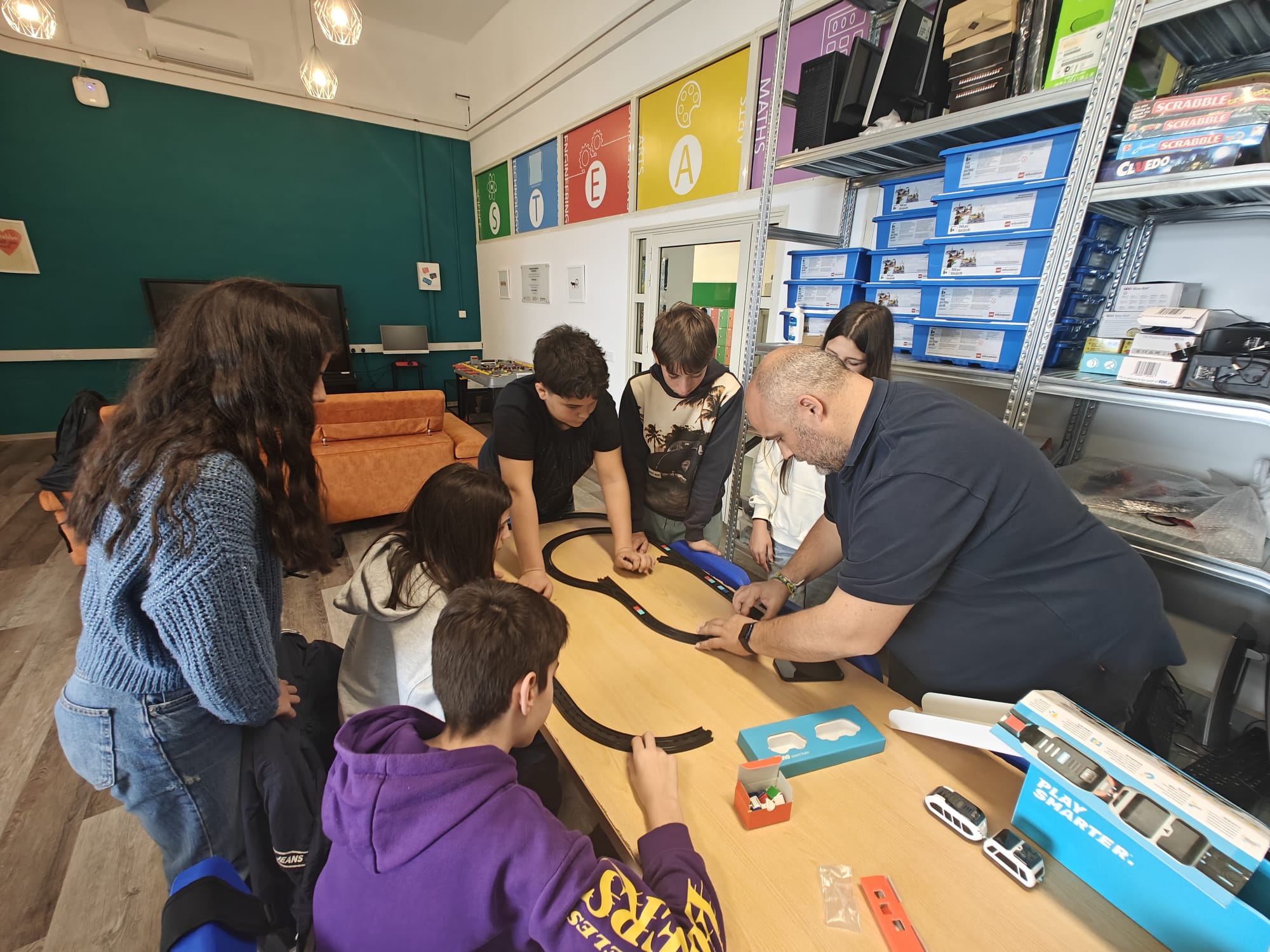
Within the S.T.E.A.M. Hub, students actively participate in a wide range of activities including robotics, coding, Arduino programming, and other technology-based projects. The hub is also equipped with a 3D printer and a variety of resources that support both exploratory learning and structured sessions. A dedicated recording studio allows students and educators to develop multimedia projects, while gaming consoles are used for brain-training activities that promote problem-solving, strategic thinking, and collaboration.
The S.T.E.A.M. Hub also serves as a central space for international collaboration through Erasmus+ projects such as RoboPisces, Miracle Project, GIGA Games, and RoboStellars. Beyond student sessions, the hub is widely used for staff development and curricular planning, enabling educators to further enhance their skills in S.T.E.A.M. education and digital literacy. One of the highlights of the year is the S.T.E.A.M. Fest, during which Year 4 students design and lead S.T.E.A.M. activities for visiting classes from other schools, creating a vibrant atmosphere of shared learning, creativity, and fun.
The school continuously invests in equipping the S.T.E.A.M. Hub with the latest equipment and resources, ensuring that both students and educators are provided with the best possible opportunities to develop essential future-ready skills.
Authors: Graziella Brincat and James Callus